
How We Work
From the brief to the final cut.
Understand what happens at each stage and what decisions you’ll be asked to make.
Explore How We Work
Brief and objectives
Clarify the reason for making the work, what the audience should take away, and how you’ll judge whether the project met its brief.
Audience and platform
Identify who the work is for and where it will appear. Discuss the viewing context, language, format and platform requirements that should shape the creative decisions.
Scope, timing and resources
Review the expected deliverables, budget range, target dates and constraints. Decide which assumptions need to be resolved before committing to a treatment.
Stakeholder alignment
Identify who supplies inputs, who reviews the work and who signs off. Record open questions and agree on what the next stage needs to produce.

Concept and treatment
Develop the central idea into a treatment covering tone, point of view and visual references. Use it to agree on the creative direction before detailed planning.
Story and script
Turn the treatment into a script, outline or format. Refine the narrative beats, characters, interviews or messages around what the brief needs to communicate.
Visual and technical planning
Prepare storyboards, shot priorities and production references where useful. Match camera, sound, casting, locations and design needs to the project’s scale.
Schedule and approvals
Translate the approved direction into a schedule, roles and review milestones. Confirm deliverables, feedback rounds and any decisions that must be made before filming.
Production & Post
Capture the work, refine it with feedback and deliver it for the intended screens.
Talk To Our Team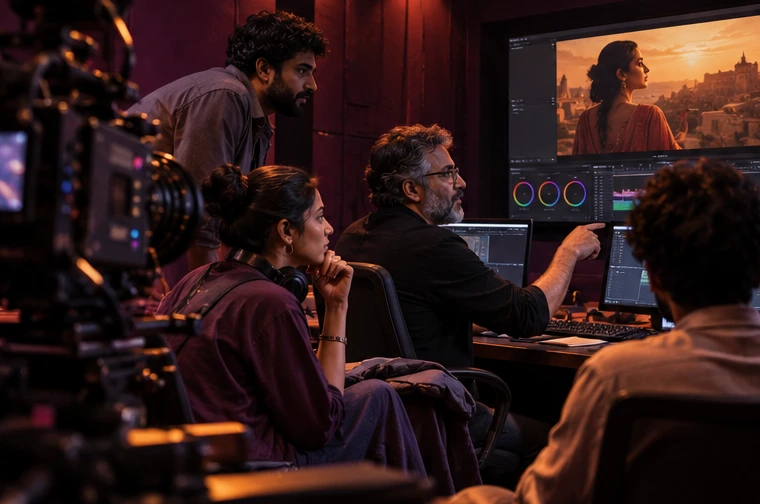
Shoot and capture
Bring the approved treatment onto the set through direction, camera, lighting and sound. Track coverage and continuity so editorial has the material it needs.
Editorial and review
Organise the footage and assemble a cut against the brief. Review narrative, pacing and performance, then record revisions through to picture lock.
Finishing and accessibility
Coordinate colour, sound, graphics and titles. Where requested, plan captions, subtitles and language versions around the intended audience and platform.
Quality checks and delivery
Review the approved versions and prepare masters, cutdowns and platform exports against the agreed requirements. Hand over the files and document what each version is for.